

Not all stretchy fabrics are created equal, and that distinction matters enormously when your body is changing week by week. Many maternity brands slap the word “stretchy” on a label without specifying whether that fabric can actually recover its shape, support your growing belly, or stay comfortable against sensitive skin. Elastic fabrics, when properly engineered, do far more than just expand. They adapt to your shifting silhouette, gently support your lower back, and help manage swelling and circulation, making them one of the most important features to understand when choosing maternity and postpartum clothing.
Table of Contents
- How pregnancy changes your body and clothing needs
- What makes elastic fabrics different for maternity wear
- Health and comfort advantages: Beyond just stretch
- Key considerations: Fit, care, and finding the right elastic maternity wear
- Rethinking maternity comfort: What most brands overlook about elastic fabrics
- Experience true elastic comfort with our maternity wear
- Frequently asked questions
Key Takeaways
| Point | Details |
|---|---|
| Elastic fabrics adapt | They adjust to your changing body throughout pregnancy for reliable comfort. |
| Provide health benefits | Gentle compression from elastic fabrics helps support your back, reduce swelling, and improve blood flow. |
| Quality matters most | Look for garments with high stretch and recovery, midweight material, and proper care labels for lasting comfort. |
| Know your needs | Plus sizes or multiples may need extra support or higher elastane content for the best fit. |
How pregnancy changes your body and clothing needs
Pregnancy is one of the most physically demanding experiences a body can go through, and the changes happen fast. Your belly expands steadily from the first trimester onward, but the shifts don’t stop there. Your hips widen, your ribcage expands to make room for your growing uterus, and your center of gravity moves forward as your baby grows. By the third trimester, many women carry an additional 25 to 35 pounds, most of it concentrated in the front of the body.
These changes create very specific clothing challenges that standard fabrics simply aren’t designed to handle:
- Expanding belly and hips: Rigid waistbands dig in and leave marks on sensitive skin.
- Swelling in the legs and feet: Tight seams and non-stretch panels restrict circulation and worsen discomfort.
- Shifting center of gravity: Without abdominal support, lower back pain intensifies throughout the day.
- Sensitive, stretched skin: Rough textures, scratchy seams, and synthetic fabrics that don’t breathe cause irritation and itching.
- Postpartum recovery: After birth, your body continues to change for weeks or months, and clothing needs to adapt just as quickly.
Traditional fabrics like stiff denim, woven cotton, or polyester blends without elastane don’t move with you. They bunch, pull, and pinch. They can’t accommodate the rapid changes that happen even week to week during the second and third trimesters. A pair of pants that fits perfectly at 20 weeks may feel unbearable by 28 weeks if the fabric doesn’t have meaningful stretch and recovery.
“Elastic fabrics offer gentle support, improve circulation, reduce swelling, and provide back and abdominal stability as the body’s center of gravity shifts.”
This is why elastic fabrics are not a luxury in maternity wear. They’re a functional necessity. A well-designed elastic garment can reduce lower back strain by gently distributing weight across the abdomen. It can prevent the uncomfortable leg swelling that many women experience in the third trimester. And it can feel just as comfortable at the end of a long day as it did in the morning.
The right no-chafe maternity underwear made with quality elastic fabric eliminates the pinching and pressure that standard underwear causes as your hips and belly grow. Similarly, lounge shorts for maternity designed with proper stretch allow you to move freely whether you’re resting, walking, or chasing a toddler.
After highlighting the gap between standard fabrics and pregnancy needs, let’s understand why elastic fabrics are specifically designed to solve these unique challenges.
What makes elastic fabrics different for maternity wear
Elastic fabrics are not simply fabrics that feel soft or loose. They are technically engineered textiles that contain synthetic fibers, most commonly elastane (also sold under the brand name Spandex), blended with natural fibers like cotton or bamboo. This blend is what creates the stretch-and-recover behavior that makes elastic fabrics so valuable during pregnancy.
Here’s how the key properties break down:
| Property | Standard fabric | Quality elastic maternity fabric |
|---|---|---|
| Stretch capacity | Less than 20% | 60% or more in both directions |
| Shape recovery | Poor, often permanent stretch | 95% or higher after repeated use |
| Fabric weight (GSM) | Varies widely | 180 to 350 GSM for support |
| Breathability | Depends on fiber | Better with cotton/bamboo blends |
| Skin feel | Can be rough or stiff | Soft, smooth, gentle against skin |
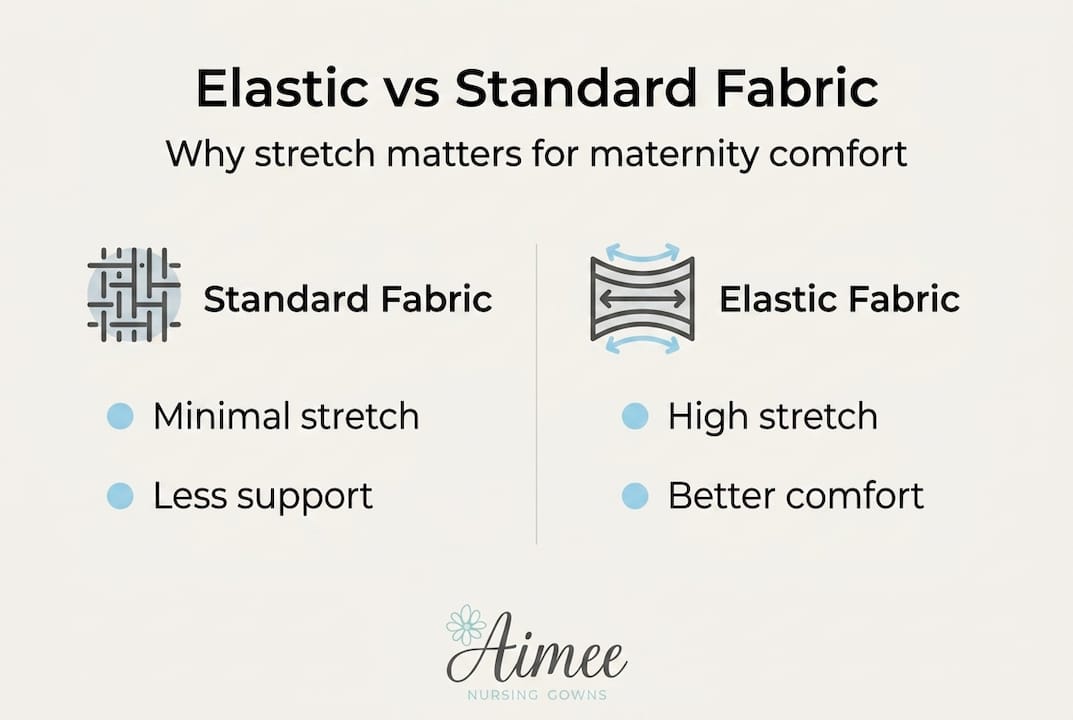
The numbers matter more than most people realize. Fabric benchmarks require at least 60% stretch in both directions, at least 95% recovery after 10 wear-and-wash cycles, and a midweight range of 180 to 350 GSM for the right combination of opacity and support.
What does that mean in practical terms? A fabric with only 30% stretch will feel tight and restrictive as your belly grows. A fabric with poor recovery will bag out and lose its shape after just a few washes, leaving you with saggy waistbands and stretched-out panels that no longer provide support. A fabric that’s too lightweight will be sheer and offer no real abdominal support. Too heavy, and it becomes uncomfortable in warmer weather.
- Check the fiber content label. Look for at least 5 to 8% elastane in the blend. Higher percentages (up to 20%) offer more compression and recovery.
- Test the stretch before buying. Gently stretch the fabric in both directions. It should extend easily and snap back without distortion.
- Feel the weight. Hold the fabric up to light. If it’s sheer, it’s likely too lightweight for proper support.
- Check the seams. Flat or seamless construction reduces chafing on sensitive skin.
- Read the care label. Fabrics that require cold washing and air drying are typically better quality blends.
Pro Tip: When shopping for maternity underwear stretch garments, stretch the waistband between both hands and hold for five seconds. If it doesn’t return to its original shape quickly, the elastane content is likely too low to last through your pregnancy.
Care also plays a major role in how long elastic fabrics perform. Elastane degrades faster with heat, so tumble drying repeatedly breaks down the fiber structure and reduces recovery over time. Washing in cold water and laying flat or hanging to dry significantly extends the life of your maternity garments.
Health and comfort advantages: Beyond just stretch
The physical benefits of elastic maternity fabrics go well beyond just feeling comfortable. When properly designed, these garments actively support your health throughout pregnancy and into the postpartum period.
Circulation and swelling. One of the most common complaints during the second and third trimesters is swelling in the legs, ankles, and feet, a condition called edema. Gentle compression from elastic fabrics can help move fluid back toward the heart, reducing that uncomfortable puffiness. Compression leggings improve circulation and reduce swelling, making them one of the most practical investments you can make during pregnancy.
Back and abdominal support. As your belly grows, your lower back muscles work overtime to compensate for the forward shift in weight. A high-waisted elastic panel that sits across the lower abdomen can redistribute some of that load, reducing strain on the lumbar spine. Many women report significant relief from lower back pain simply by switching to properly supportive maternity leggings or underwear.
Here’s a comparison of how different garment types deliver these benefits:
| Garment type | Primary benefit | Best for |
|---|---|---|
| High-waisted leggings | Abdominal and back support | All-day wear, walking |
| Compression socks | Leg circulation, edema relief | Long periods of standing |
| Supportive underwear | Pelvic and lower back stability | Daily comfort, postpartum |
| Maternity bra | Breast and shoulder support | Reducing upper back strain |
| Lounge shorts | Gentle hip and thigh comfort | Rest, light activity |
Moisture management and breathability. Pregnancy raises your core body temperature, and many women run warmer than usual throughout all three trimesters. Elastic fabrics blended with natural fibers like bamboo or cotton wick moisture away from the skin and allow air to circulate. Pure synthetic blends, even if they stretch well, can trap heat and cause discomfort or skin irritation.
Key benefits at a glance:
- Reduces lower back and pelvic pain through gentle abdominal support
- Improves leg circulation and helps manage swelling
- Stays comfortable against sensitive, stretched skin
- Adapts to your body’s changes without requiring constant size changes
- Supports postpartum recovery as your body gradually returns to its pre-pregnancy shape
Choosing postpartum underwear support with elastic construction helps during recovery after both vaginal and cesarean births. The gentle compression can ease discomfort around the incision site or perineal area without adding pressure. A well-fitted contour maternity bra with elastic support panels also reduces the shoulder and upper back strain that comes with rapidly changing breast size during pregnancy and nursing.
Key considerations: Fit, care, and finding the right elastic maternity wear
Understanding the benefits of elastic fabrics is one thing. Knowing how to find, fit, and care for them properly is where that knowledge becomes truly useful.
Getting the fit right. Elastic fabrics are forgiving, but that doesn’t mean sizing doesn’t matter. A garment that’s too small will over-compress and restrict circulation. One that’s too large won’t provide the support you need and will bunch uncomfortably. Start by sizing based on your pre-pregnancy measurements and size up as needed. Most quality maternity brands include guidance on how their elastic garments are designed to fit across trimesters.
- Look for garments labeled as “growing with you” or designed to fit across multiple trimesters.
- If you’re carrying multiples or have a larger frame, size up from your usual maternity size and look for higher elastane percentages for added support.
- Avoid garments with very wide, rigid waistbands that don’t flex. The waistband should feel snug but never tight enough to leave marks.
Special considerations for plus-size and multiple pregnancies. Plus-size or multiples pregnancies may need sizing up or higher elastane content for adequate support. However, it’s equally important to avoid over-compression, especially if your skin is particularly sensitive or if you experience varicose veins. Too much compression in the wrong areas can worsen discomfort rather than relieve it.
Pro Tip: If you have sensitive skin or are prone to heat rash, look for elastic blends that include at least 50% natural fiber content like bamboo or organic cotton. These breathe significantly better than high-synthetic blends and reduce the risk of irritation.
Caring for your elastic maternity clothes. Proper care is the single most effective way to extend the life of your maternity wardrobe.
- Wash in cold water on a gentle cycle to preserve fiber integrity.
- Avoid fabric softeners, which coat elastane fibers and reduce their recovery ability over time.
- Never tumble dry on high heat. Air dry or use the lowest heat setting possible.
- Store folded rather than hung to prevent waistbands from stretching out of shape.
- Treat stains promptly with cold water, not hot, to avoid setting the stain and damaging the fibers.
Choosing assorted postpartum underwear packs with consistent fiber quality across the set makes it easier to care for everything together. A black contour maternity bra with quality elastic construction, washed consistently in cold water, should maintain its shape and support through months of daily wear.
Rethinking maternity comfort: What most brands overlook about elastic fabrics
Here’s something we’ve noticed that most maternity brands won’t tell you: the word “stretchy” on a label means almost nothing without context. A fabric can stretch 30% and technically qualify as elastic. It can contain 2% elastane and still be marketed as a stretch garment. These numbers don’t come close to what pregnant and postpartum bodies actually need.
The real quality markers are recovery rate, fiber blend, and fabric weight. A garment that stretches beautifully in the store but loses its shape after five washes has failed you. A waistband that feels supportive at 20 weeks but rolls down and bunches by 30 weeks was never properly engineered in the first place.
We’ve built our garments around the technical standards that actually matter, because we’ve heard from too many moms who spent money on “maternity” clothes that fell apart or stopped supporting them when they needed it most. Seamless maternity underwear with proper elastane recovery, flat seam construction, and breathable fiber blends isn’t a premium upgrade. It’s the baseline that every pregnant and postpartum woman deserves. When you know what to look for, you stop settling for garments that just stretch and start choosing ones that genuinely support you.
Experience true elastic comfort with our maternity wear
Ready to find comfort and confidence in maternity wear that actually works with your body?
At Nursing Gowns, we design every piece with the technical standards your changing body deserves. Our elastic maternity and nursing garments are made in the USA by a small, woman-owned team that understands what pregnant and postpartum moms truly need. From supportive undergarments to soft loungewear, every item is built to stretch, recover, and stay comfortable through every stage. Browse our full range of maternity nursing tops, explore maternity underwear and accessories, or shop our complete collection of maternity gowns and essentials to find the right fit for where you are right now.
Frequently asked questions
What is the best type of elastic fabric for maternity clothing?
A blend with at least 60% stretch in both directions, 95% or higher recovery, and a midweight of 180 to 350 GSM provides the best combination of comfort and support for maternity wear.
How do elastic fabrics help reduce swelling during pregnancy?
Elastic fabrics provide gentle compression that improves circulation and reduces swelling, particularly when worn as compression leggings or supportive underwear during the second and third trimesters.
Can plus-size or multiples pregnancies still benefit from elastic fabrics?
Yes, absolutely. Plus-size or multiples may need to size up or choose garments with higher elastane content, but should avoid over-compression if skin is particularly sensitive or if varicose veins are present.
How should elastic maternity clothes be cared for to maintain stretch?
Wash in cold water on a gentle cycle and avoid high heat drying, since elastane degrades faster with repeated heat exposure, which reduces the fabric’s recovery ability over time.