
Sleep during pregnancy and the postpartum period is one of the most talked-about struggles among new and expectant mothers, yet the role of sleepwear rarely gets the attention it deserves. Between night sweats, a growing belly, frequent nursing sessions, and postpartum recovery, your body is working overtime every single night. The right sleepwear is not just about looking cute at bedtime. It directly affects how well you sleep, how quickly you recover, and how you feel when morning finally comes. This guide breaks down exactly what to look for and why it matters.
Table of Contents
- How to choose the best pregnancy and postpartum sleepwear
- Top benefits of pregnancy sleepwear features
- Comparison of sleepwear materials and fits for pregnancy
- Special benefits: Compression and support for recovery
- Why most advice about pregnancy sleepwear misses the real-life benefits
- Find your perfect pregnancy and postpartum sleepwear
- Frequently asked questions
Key Takeaways
| Point | Details |
|---|---|
| Prioritize comfort and support | Look for stretchy, breathable fabrics and gentle compression to match your changing needs. |
| Choose nursing-friendly features | Button fronts, zippers, or snap panels make nighttime feeding easier and less disruptive. |
| Breathable materials enhance rest | Bamboo and cotton help reduce overheating and wick away sweat while you sleep. |
| Compression aids recovery | Light compression can reduce swelling and provide the support needed during heavy recovery periods. |
| Fit matters for sleep quality | Loose designs support side sleeping, while the right fit prevents discomfort and allows restful movement. |
How to choose the best pregnancy and postpartum sleepwear
After understanding the need for quality sleep during this period, it is helpful to know how to evaluate which sleepwear actually addresses these unique needs. Not all pajamas are created equal, and the differences between a generic set from a big-box store and sleepwear designed specifically for pregnancy can feel enormous by 3 a.m.
The most important factors to consider include:
- Fabric breathability and moisture-wicking ability. Bamboo and cotton blends are the gold standard. Bamboo in particular pulls moisture away from your skin more efficiently than standard cotton, keeping you cooler and drier through night sweats.
- Fit and stretch. Your body changes shape week by week, especially in the third trimester. Sleepwear with a loose, stretchy fit accommodates your belly without creating pressure points that disrupt sleep.
- Nursing access. If you are postpartum or planning to breastfeed, button fronts, hidden zippers, and snap panels make nighttime feeds faster and less disruptive.
- Gentle support zones. Some sleepwear includes light support panels around the belly or back. These can reduce the ache that comes from hours of side sleeping.
- Seam placement and fabric softness. Rough seams or stiff fabrics irritate sensitive skin, which is especially common during pregnancy due to hormonal changes.
Non-restrictive fits enable side-sleeping, which is the preferred position after 20 weeks of pregnancy because it relieves pressure on the vena cava, the large vein that carries blood back to your heart. Bamboo fabric outperforms standard cotton in breathability per textile studies, creating a better overnight microclimate for your body. Our bamboo pajamas were designed with exactly this in mind, combining stretch and moisture management so you can actually stay asleep longer.
Pro Tip: Look for sleepwear with a waistband that sits below the belly rather than across it. This single detail eliminates one of the most common nighttime discomforts in the second and third trimesters.
The fabric conversation is worth spending time on. Many mothers default to whatever cotton pajamas they already own, not realizing that a tight waistband or a non-stretchy neckline creates friction and wakefulness throughout the night. When you are already waking up for bathroom trips or feeding sessions, the last thing you need is your clothing adding to the disruption.
Top benefits of pregnancy sleepwear features
With clear criteria in mind, let’s explore what makes certain features genuinely beneficial during pregnancy and postpartum. Each feature in well-designed maternity sleepwear solves a real problem you are likely already experiencing.
Nursing access minimizes night disruptions. Nursing-friendly features like button-down fronts, hidden zippers, or snap panels enable easy one-handed access for nighttime breastfeeding, minimizing disruptions and supporting a quicker return to sleep. When you are half-asleep and a hungry baby is crying, fumbling with a regular top for two minutes feels like an eternity. Snap panels and wrap-style fronts cut that time dramatically.
Light compression supports postpartum recovery. Research on pelvic compression garments in postpartum women shows decreased peak pelvic jerk, reduced pelvic rotation excursion, increased perceived support, and reduced fear of symptoms during movement. This translates to real comfort when you get up for nighttime feeds and then settle back into bed.
Here are the key benefits that well-designed sleepwear delivers:
- Temperature regulation. Pregnancy hormones raise your core body temperature. Breathable fabrics actively pull heat away from your skin rather than trapping it.
- Belly and back support. Supportive panels reduce the strain on your lower back and hips during extended side sleeping, which is often the only comfortable position in late pregnancy.
- Skin comfort. Soft, seam-free or flat-seam construction prevents the skin irritation that is common when your skin becomes more sensitive during pregnancy.
- Postpartum swelling relief. Light compression in the right areas can reduce fluid buildup in the legs and feet, a very common postpartum complaint.
- Confidence and mental comfort. Feeling comfortable and supported in what you are wearing at night genuinely affects your mood and sense of wellbeing during a physically demanding time.
Pairing a well-fitted nursing sleep bra with a loose nursing gown is one of the most effective combinations for postpartum nights. The bra provides gentle support and holds nursing pads in place, while the gown gives you room to move and breathe. You can explore the full range of maternity sleepwear options to find combinations that suit your specific stage and needs.
Pro Tip: If you experience heavy night sweats postpartum (very common due to dropping estrogen levels), keep a second set of sleepwear on your nightstand. Switching quickly without fully waking up preserves your sleep quality far better than searching through drawers at 2 a.m.
Comparison of sleepwear materials and fits for pregnancy
Understanding feature importance is easier with a side-by-side look at how common materials and fits differ in real sleep scenarios.
| Material | Breathability | Moisture-wicking | Softness | Best for |
|---|---|---|---|---|
| Bamboo | Excellent | Excellent | Very soft | Night sweats, sensitive skin |
| Organic cotton | Good | Moderate | Soft | Everyday comfort, mild sweats |
| Standard cotton | Moderate | Low | Moderate | Budget option, cooler climates |
| Synthetic (polyester) | Poor | Low | Variable | Not recommended for pregnancy |
| Cotton/spandex blend | Good | Moderate | Soft | Stretch and movement |
Bamboo outperforms cotton in breathability per textile studies, and that gap becomes very noticeable when you are pregnant and running warmer than usual. Synthetic fabrics trap heat and can worsen the night sweats that are already common in pregnancy and especially in the early postpartum weeks.
“The best sleepwear may technically be no sleepwear for airflow, but pregnancy-specific needs favor lightweight breathable over nude, since support, nursing access, and warmth during postpartum recovery all require some coverage.”
When it comes to fit, the choices break down into three main categories. Loose and flowing styles like nightgowns and sleep dresses give maximum belly room and airflow. Stretchy fitted styles like bamboo leggings and fitted nursing tops offer more support and work well for women who feel more comfortable with some gentle compression. Hybrid styles combine a loose top with a supportive waistband, giving you the best of both worlds.
Key points on fit:
- Loose fits are ideal for the third trimester when belly size peaks and pressure anywhere on the abdomen becomes uncomfortable.
- Stretchy fitted options work well in the early postpartum period when your body is still adjusting and you want light support without restriction.
- Avoid any waistband or hemline that sits directly across the belly at its widest point. This creates pressure that disrupts sleep and can worsen round ligament discomfort.
Our bamboo sleepwear range uses a fabric blend specifically chosen for its superior temperature regulation, which makes it one of the most practical choices for pregnant and postpartum women who struggle with overnight overheating.
Special benefits: Compression and support for recovery
Now, let’s take a closer look at how compression and structured support offer medical and sensory benefits for recovery and overall sleep quality.
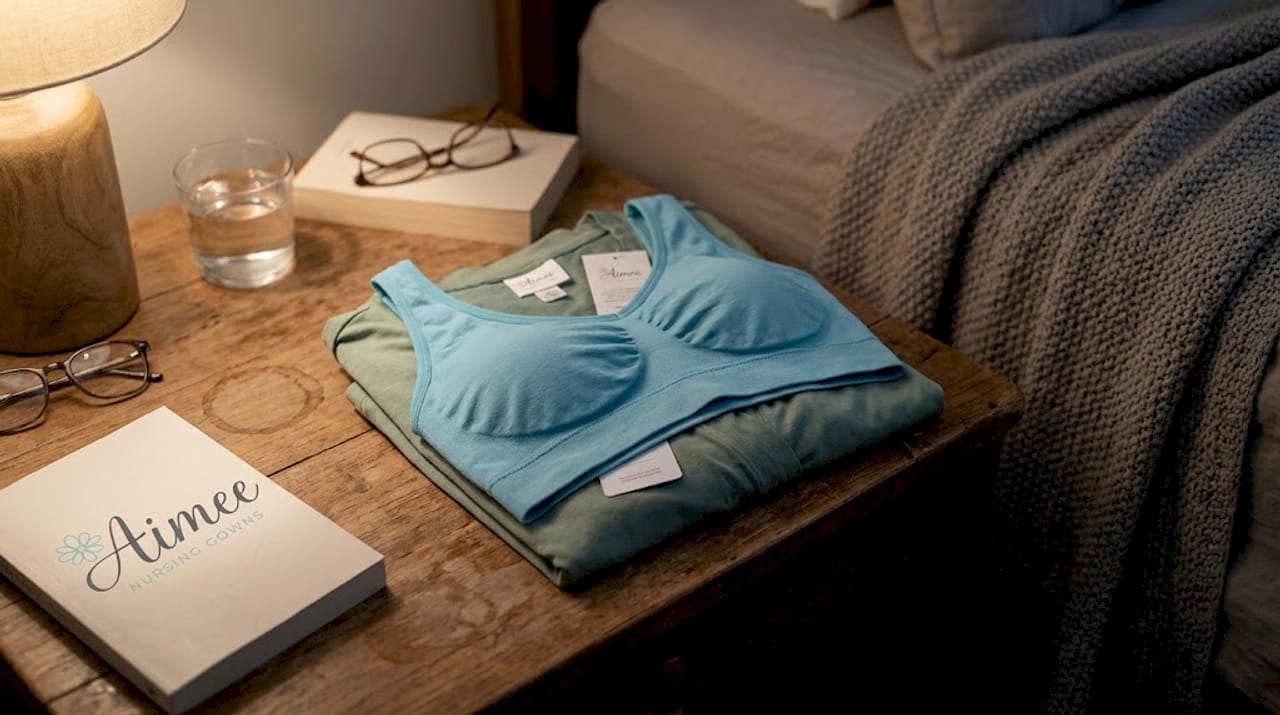
Compression in maternity and postpartum sleepwear is not the same as tight clothing. When done correctly, it is light, graduated pressure that supports circulation and reduces fluid buildup. A randomized study of 51 women found that light compression at 18 to 21 mmHg in maternity garments reduces lower limb edema risk, venous reflux, and great saphenous vein diameter postpartum, improving both comfort and quality of life.
Here is how to use compression and support features effectively:
- Start with light compression. Class 1 compression (18 to 21 mmHg) is appropriate for most pregnant and postpartum women. Anything higher should be used only under medical guidance.
- Focus on the lower body. Compression is most beneficial in the legs and lower abdomen, where fluid tends to pool during pregnancy and the postpartum period.
- Pair compression bottoms with loose tops. This gives you targeted support without feeling restricted across your chest or belly.
- Listen to your body. If compression causes discomfort, tingling, or increased swelling, remove the garment and consult your healthcare provider.
- Use support panels for back and belly comfort. Some maternity sleepwear includes a built-in panel that gently lifts the belly, reducing the strain on your lower back during side sleeping.
| Compression level | Pressure (mmHg) | Best use |
|---|---|---|
| Light (Class 1) | 18 to 21 | Edema prevention, daily wear, sleep |
| Moderate (Class 2) | 23 to 32 | Varicose veins, medical recommendation |
| Firm (Class 3) | 34 to 46 | Medical conditions only |
Adding seamless maternity underwear to your nighttime routine can provide that light lower-body support without the bulk of traditional compression garments. Seamless construction also eliminates the chafing that can come from seams pressing into swollen or sensitive skin overnight.
Why most advice about pregnancy sleepwear misses the real-life benefits
After looking at the research and product features, it is important to cut through the noise and share a real-world perspective on what actually makes a difference.
Most generic advice about pregnancy sleepwear falls into one of two unhelpful camps. The first says “just wear cotton, it’s breathable enough.” The second says “invest in everything, you deserve it.” Neither of these actually addresses what your body is doing overnight or what you specifically need at different stages of pregnancy and postpartum recovery.
Here is what the advice usually misses. Body temperature during pregnancy is not static. It fluctuates based on your trimester, your hormone levels, the season, and even your activity level during the day. A cotton nightgown that feels perfect at 20 weeks may leave you drenched in sweat at 36 weeks. Your sleepwear needs to evolve with your body, not stay fixed.
Postpartum circulation changes are real and underappreciated. After birth, your body is rapidly shifting fluid, your estrogen drops sharply, and your vascular system is recalibrating. Night sweats in the first two to six weeks postpartum are almost universal. This is not just a minor inconvenience. Waking up soaked disrupts the deep sleep you desperately need to heal and produce milk. Choosing moisture-wicking fabrics for this specific window is one of the highest-impact decisions you can make for your recovery.
The myth that any pajamas will do is also worth addressing directly. Your skin during pregnancy is more sensitive due to stretching and hormonal changes. Rough seams, synthetic fabrics, and tight waistbands that you tolerated before pregnancy become genuine sleep disruptors. The investment in purpose-built sleepwear pays off in actual sleep minutes, which matters enormously when you are already sleep-deprived.
What we have found, both from clinical experience and from the feedback of thousands of mothers, is that the women who prioritize real comfort for sleep from the second trimester onward report fewer nighttime wake-ups from discomfort, faster return to sleep after feeds, and a better overall sense of wellbeing during the postpartum period. Sometimes simplicity wins. A single well-chosen bamboo nursing gown can outperform an entire drawer of ill-fitting pajamas.
The takeaway is this: your sleepwear is not a luxury. During pregnancy and postpartum, it is a functional tool for recovery, comfort, and rest. Treat it that way.
Find your perfect pregnancy and postpartum sleepwear
You have done the reading. You know what features matter and why. Now the practical question is where to find sleepwear that actually delivers on all of it without having to shop across a dozen different stores.
At NursingGowns.com, every product is designed with the specific needs of pregnant and postpartum women in mind, not adapted from generic loungewear. You can shop pregnancy sleepwear and find nursing gowns, maternity robes, and sleep essentials that combine breathable fabrics, nursing access, and supportive fits in one place. For lower-body comfort and light compression, the see seamless maternity underwear option is a customer favorite for overnight wear. If you are building a full nursing wardrobe, browsing the maternity nursing tops collection gives you daytime and nighttime options that work together seamlessly. Founded by a healthcare professional, every product reflects both clinical understanding and real maternal experience.
Frequently asked questions
Why do I need special sleepwear during pregnancy?
Special sleepwear provides room for your growing belly, supports side sleeping, and uses fabrics that regulate temperature, all of which directly contribute to better rest as your body changes. Non-restrictive fits and moisture-wicking fabrics create a better sleep environment than standard pajamas can offer.
Are compression garments safe to wear while sleeping?
Light compression sleepwear can reduce swelling and improve comfort, but always follow your doctor’s advice for use during pregnancy and postpartum. Research shows light compression at 18 to 21 mmHg reduces lower limb edema and venous reflux in postpartum women with good safety outcomes.
What fabric is best for pregnancy sleepwear?
Bamboo and cotton are excellent for breathability and moisture-wicking, helping you stay cool and comfortable overnight. Bamboo outperforms cotton in breathability per textile studies, making it the top choice for managing pregnancy night sweats.
Can I sleep without any sleepwear while pregnant?
Experts note that sleeping nude maximizes airflow, but most pregnant and postpartum women benefit more from breathable, supportive sleepwear. Pregnancy-specific needs favor lightweight breathable options over sleeping nude, since nursing access, belly support, and postpartum warmth all require some coverage.