
Finding genuinely American-made maternity and nursing products feels harder than it should be. You’re growing a baby, your body is changing fast, and the last thing you need is to spend hours decoding confusing labels on clothing that may or may not actually support the values you care about. Whether you’re drawn to USA-made goods for safety, sustainability, or simply knowing a fellow American woman sewed the seams, you deserve clear answers. This guide walks you through exactly what “Made in USA” means, what to look for when shopping, how to choose category by category, and how to verify that your purchase actually delivers on its promise.
Table of Contents
- Understanding ‘Made in USA’ maternity labels
- Preparing to shop: What to look for in USA-made maternity items
- How to choose the right USA-made maternity and nursing essentials
- Verifying USA-made claims and supporting sustainable brands
- Why absolute ‘Made in USA’ purity isn’t always the best choice
- Find your perfect USA-made maternity essentials now
- Frequently asked questions
Key Takeaways
| Point | Details |
|---|---|
| Decode USA labels | Understand the strict FTC standards for ‘Made in USA’ and what related claims really mean. |
| Transparency over purity | Brands that are honest about their sourcing and production may offer better value than those chasing absolutes. |
| Checklist for shopping | Use a practical checklist to verify origin, check for key certifications, and ensure ethical production. |
| Support sustainable brands | Choose companies committed to local labor and sustainability to make the biggest positive impact. |
Understanding ‘Made in USA’ maternity labels
Now that you appreciate the challenge, let’s break down exactly what makes an item genuinely USA-made.
The phrase “Made in USA” sounds simple. It isn’t. The Federal Trade Commission (FTC) sets the legal standard, and understanding it protects you from misleading marketing that preys on well-meaning shoppers.
To qualify under FTC rules, a product must be “all or virtually all” made in the United States. That means the product’s final assembly, most of its manufacturing, and the significant majority of its components must originate domestically. “Virtually all” is intentionally flexible, but the FTC takes enforcement seriously. If a brand cannot substantiate its claim, it can face legal action.
Here’s where it gets complicated for maternity wear specifically. The United States produces very little raw textile fabric domestically anymore. Most cotton, bamboo, and spandex blends used in maternity clothing are grown or manufactured overseas, often in China, India, or Southeast Asia. That means even a small business that cuts, sews, and finishes every garment in its own American facility may still be working with imported fabric. That doesn’t automatically disqualify the product, but it does affect how the label must read.
Common label phrases and what they actually mean:
| Label phrase | What it means |
|---|---|
| Made in USA | All or virtually all domestic content and labor |
| Assembled in USA | Final assembly domestic, components may be imported |
| Sewn in USA of imported fabric | Labor is domestic, fabric is foreign |
| Designed in USA | Only the design happened here, nothing else |
| Imported | Made outside the United States |
The phrase “designed in USA” is one of the most misleading you’ll encounter. It tells you nothing about where the garment was actually made. A product designed in a California studio but manufactured in a Vietnamese factory is not a USA-made product in any meaningful sense. Watch for it on fast-fashion maternity brands that want the patriotic association without the local investment.
Transparency in manufacturing is the real signal of a trustworthy brand. When a small, woman-owned business tells you exactly where their seamless no-chafe maternity underwear is cut and sewn, that specificity matters. It means they have nothing to hide and everything to stand behind.
“A brand willing to tell you exactly where and how their garments are made is a brand worth trusting. Vague language is a red flag, not a style choice.”
The bottom line: read the full label, not just the headline claim. Look for the specific qualifier. “Sewn in USA of imported fabric” is honest and meaningful. “Made in USA” with no further detail requires more scrutiny. And “designed in USA” should be treated with healthy skepticism until you dig deeper.
Preparing to shop: What to look for in USA-made maternity items
Once you know how to decode the labels, what exactly should you look for in the details when shopping?
Shopping for maternity and nursing wear is already emotionally loaded. Your body is changing, your budget may be tighter than usual, and you want items that will actually last through pregnancy, postpartum, and potentially another baby. Adding the layer of USA-made verification can feel overwhelming. But a simple checklist makes it manageable.
What to look for when evaluating a brand or product:
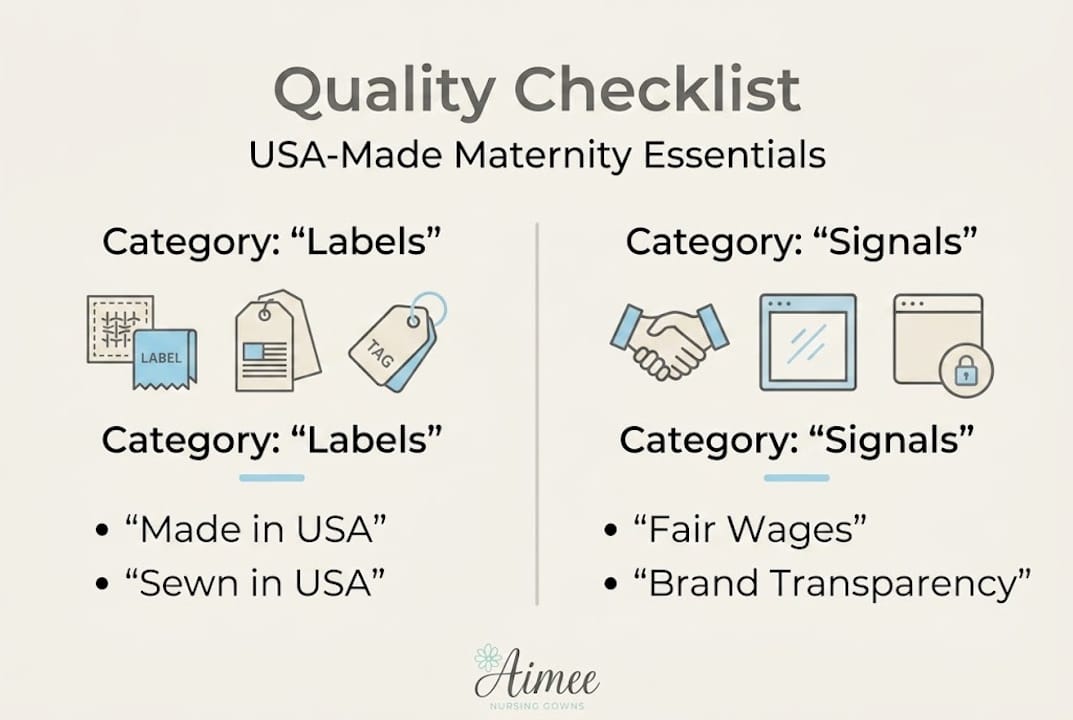
- Clear, FTC-compliant labeling on the product page or physical tag
- A brand story that names the state or facility where garments are made
- Transparent supply chain information, even if fabric is imported
- Customer service that can answer origin questions directly
- No vague phrases like “crafted with American pride” without specifics
- Independent reviews that mention quality and durability
- Return or exchange policies that reflect confidence in the product
The reality of full USA-made is that it’s rare and often expensive because global fabrics dominate the supply chain. Prioritizing transparency over absolute purity is actually the more sustainable and practical approach for most families. A brand that sews in the USA, pays American wages, and is honest about using imported bamboo fabric is doing far more good than a brand with a vague “Made in USA” claim and no supply chain information at all.
| Shopping signal | Green flag | Red flag |
|---|---|---|
| Label language | “Sewn in USA of imported fabric” | “Designed in USA” |
| Brand info | Names the city or facility | Uses patriotic imagery only |
| Supply chain | Explains fabric sourcing | No information available |
| Customer support | Answers origin questions | Deflects or ignores |
Pro Tip: Before you buy, send a quick email or message to the brand asking where the item is cut and sewn. A trustworthy USA-made brand will answer quickly and specifically. If you get a non-answer, that tells you everything.
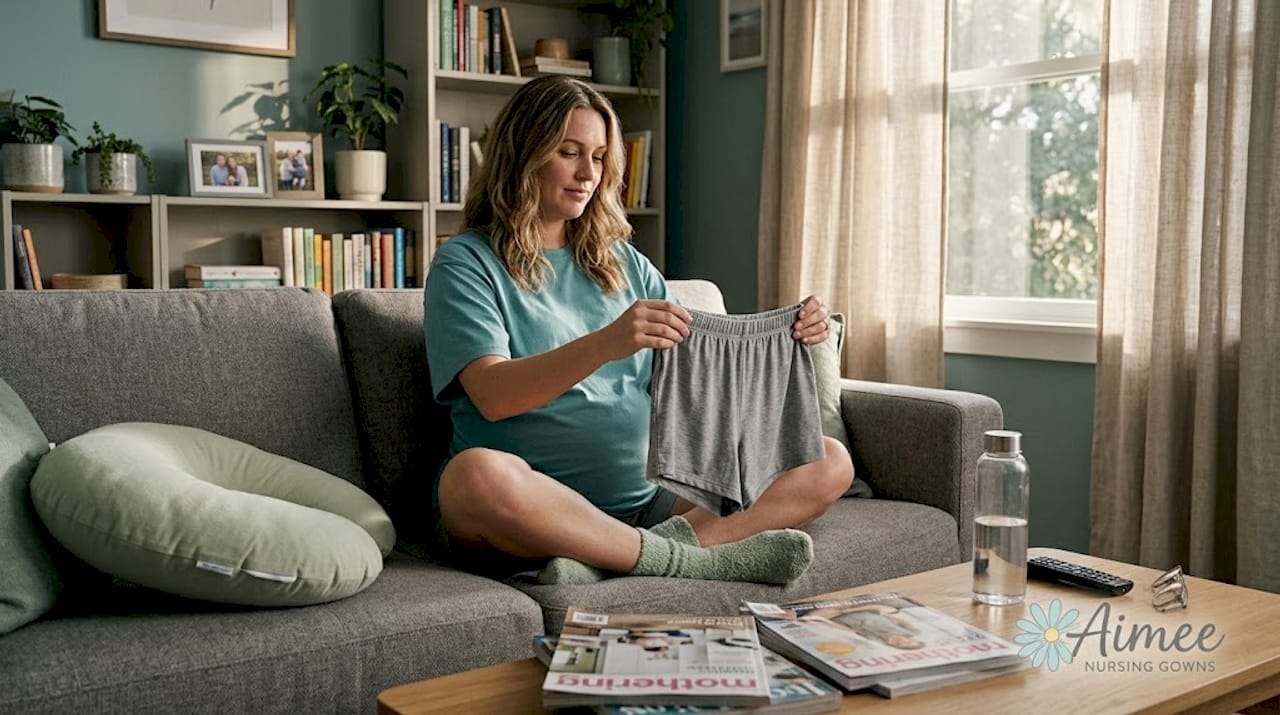
When shopping for maternity and postpartum lounge shorts or any everyday piece you’ll wear constantly, comfort and origin should work together. A garment made with domestic labor and quality control tends to have better construction, more consistent sizing, and longer wear life. The same applies to bamboo maternity shorts, where the softness of the fabric matters as much as where it was assembled.
Balance is key. You don’t have to find a product where every thread was spun in Ohio. You do need to find a brand that respects your intelligence and your values enough to be honest with you.
How to choose the right USA-made maternity and nursing essentials
With your checklist at hand, let’s go category by category to help you choose the essentials you’ll wear most.
Maternity and nursing wardrobes don’t need to be enormous. A focused collection of well-made, versatile pieces serves you better than a closet full of items that don’t hold up. Here’s how to approach each major category with a USA-made lens.
Step-by-step approach to choosing your maternity and nursing essentials:
-
Start with your bra. You’ll wear it every single day, and fit matters enormously as your body changes. Look for a contour maternity and nursing bra that specifies domestic manufacturing. Ask whether the elastic and hardware are also USA-sourced or at minimum assembled here. A well-constructed bra from a transparent brand will outlast three cheap imported alternatives.
-
Choose your bottoms carefully. Shorts, leggings, and bike shorts are the workhorses of a maternity wardrobe. Maternity bike shorts made with domestic labor tend to have more consistent waistband construction, which matters when your belly is growing weekly. Check the seams and the waistband fold-over for quality stitching.
-
Evaluate nursing tops and gowns. These need to function well, not just look good. Nursing access panels, hidden layers, and stretch recovery all depend on skilled construction. USA-sewn garments often show better attention to these functional details because the maker is accountable to domestic quality standards.
-
Consider nursing covers and accessories. These smaller items are often overlooked, but they’re also where imported products flood the market. Look for brands that apply the same manufacturing standards to their accessories as they do to their core clothing line.
-
Think postpartum from the start. Many maternity items double as postpartum essentials. Choosing pieces with that dual purpose in mind means you get more value from each purchase, which also makes the slightly higher price of USA-made goods easier to justify.
Pro Tip: When in doubt about a product’s origin, look at the brand’s “About” page. Small, woman-owned American businesses almost always lead with their manufacturing story because it’s a point of genuine pride, not just a marketing line.
As transparency in sourcing becomes more important to consumers, brands that prioritize it stand out. When you choose a product based on honest labeling and verifiable origin, you’re also sending a market signal that this matters to you. That shapes what brands invest in going forward.
Verifying USA-made claims and supporting sustainable brands
After finding what you want, here’s how to make sure your money supports both authenticity and responsible practices.
Verification doesn’t require a private investigator. A few targeted steps will tell you almost everything you need to know about whether a brand’s USA-made claim holds up.
How to verify a brand’s manufacturing claims:
- Read the full product description, not just the headline. Look for specific language like “cut and sewn in [state].”
- Check the brand’s “About” or “Our Story” page for manufacturing details.
- Look at the care label on the physical product. It is legally required to list the country of origin.
- Search for the brand name plus “manufacturing” or “made in USA” to find third-party mentions or reviews.
- If something feels vague, contact the brand directly and ask specific questions about where the garment is cut, sewn, and finished.
- If you believe a brand is making false claims, you can file a complaint with the FTC at ftc.gov.
“Qualified claims like ‘sewn in USA of imported fabric’ offer a meaningful compromise, combining US labor and quality control with the reality of global fabric sourcing. Prioritizing transparency is the most honest path forward.”
Supporting brands that are honest about this compromise is genuinely the more sustainable choice. A garment sewn in an American facility means American wages, American worker protections, and American quality oversight. Those are real, meaningful benefits even when the bamboo fabric came from overseas.
Your purchasing choices also have a cumulative effect. When you consistently buy from trusted domestic retailers who are transparent about their manufacturing, you help sustain the small-batch, American-made apparel ecosystem. That ecosystem is fragile. Fast fashion and cheap imports have squeezed it for decades. Every purchase from a woman-owned, USA-sewing business is a vote for its survival.
Think of it this way: the goal isn’t perfection. The goal is meaningful impact. A brand that sews in the USA, pays fair wages, uses quality materials, and tells you the truth about all of it is doing something genuinely valuable for families, workers, and the environment.
Why absolute ‘Made in USA’ purity isn’t always the best choice
Having seen the steps, let’s consider the bigger picture: what does “USA-made” really mean for your purchasing decisions?
Here’s an opinion you might not expect from a USA-made brand: chasing 100% domestic purity in every thread and trim is often the wrong goal. We’ve seen it lead shoppers to either give up entirely because nothing meets the standard, or to buy from brands with vague claims that sound pure but aren’t.
The practical reality is that domestic textile infrastructure has been hollowed out over generations. There is simply no American-grown, American-spun, American-woven bamboo fabric available at scale. Holding every maternity brand to that impossible standard doesn’t serve families or the planet.
What actually matters is whether real American workers are being paid fair wages to make your garments, whether the brand is honest with you about what’s domestic and what isn’t, and whether the finished product is built to last. A premium USA-made essential that lasts through two pregnancies and years of postpartum wear is infinitely more sustainable than a “100% domestic” claim on a garment that pills after three washes.
Choose transparency. Choose quality. Choose brands that treat you like an intelligent adult. That’s the real standard worth holding.
Find your perfect USA-made maternity essentials now
Ready to start your search for American-made maternity comfort? Here’s where you can shop with peace of mind.
We’re a small, woman-owned business that sews our maternity and nursing products right here in the USA. We know what you’re looking for because we’ve been through it ourselves. Every piece we make is designed for real bodies going through real changes, built to last, and labeled honestly.
Browse our collection of nursing tops designed for function and comfort, or explore our nursing covers made with the same domestic care. If you’re looking for versatile pieces that carry you from pregnancy through postpartum, our full range of maternity essentials is a great place to start. Shop with confidence knowing exactly where your clothes are made and who made them.
Frequently asked questions
What does ‘all or virtually all’ made in the USA really mean?
It means the product must be almost entirely made and assembled in the United States, with minimal foreign content allowed. The FTC evaluates this on a case-by-case basis, considering both the cost and nature of any foreign components.
Are there affordable, fully USA-made maternity clothes?
Fully USA-made maternity items exist but are often more expensive because full USA-made is rare due to global fabric sourcing and the higher cost of domestic labor. Looking for honest “sewn in USA” claims with imported fabric is a practical middle ground.
How can I verify if a maternity item is really USA-made?
Check for FTC-compliant labeling on the product tag and page, look for specific manufacturing location details on the brand’s website, and don’t hesitate to contact the brand directly with questions about where the garment is cut and sewn.
Is it sustainable to buy USA-made maternity wear?
Buying USA-made maternity items is more sustainable when the brand is transparent about sourcing and prioritizes ethical labor practices. Domestic sewing means American wages, worker protections, and reduced shipping emissions, all of which add up to a meaningful environmental and social benefit.